The Legal Framework
UK law protects animal welfare — but has a devastating loophole. The beagles at MBR Acres are largely outside the Animal Welfare Act 2006.
These beagles are outside the welfare law
Section 58 of the Animal Welfare Act 2006 exempts anything lawfully done under the Animals (Scientific Procedures) Act 1986, switches off the section 9 duty of care for animals kept at an ASPA-licensed establishment, and bars most Welfare Act powers of entry there. MBR Acres is one of those establishments.
This means the beagles at MBR Acres — around 2,000 at any one time, on campaign estimates — are kept outside the duty of care that applies to every other dog in England and Wales.
Your dog
Protected by the Animal Welfare Act
Protected
Breeder dogs
Protected by AWA + dog-breeding licence rules
Protected
MBR beagles
Largely exempt under Section 58
No Duty of Care
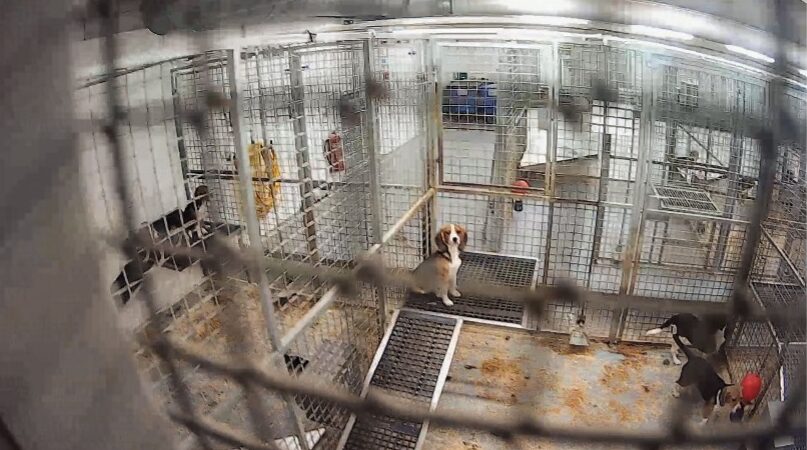 ACTUAL PHOTO FROM INSIDE THE FACILITY
SECTION 58(3) SWITCHES OFF THE WELFARE ACT’S DUTY OF CARE FOR THIS DOG.
But there are serious cracks in this shield. Breeding is not a regulated procedure. The exemption covers only what is lawfully done. And two juries have already acquitted rescuers.
Read the Full Section 58 ChallengeImportant: This page provides an analysis of existing UK legislation and public court records. It is not legal advice. If you require legal guidance, consult a qualified solicitor.
Animal Welfare Act 2006
TL;DR: The main animal welfare law applies to every protected animal in England and Wales — but Section 58 carves out ASPA-licensed establishments such as MBR Acres. Only what is not “lawfully done” under ASPA stays inside it.
The Animal Welfare Act 2006 governs animal welfare in England and Wales. Section 58 is headed “Scientific research”, and it does three separate things:
Verbatim from statute
“Nothing in this Act applies to anything lawfully done under the Animals (Scientific Procedures) Act 1986 (c. 14).”Animal Welfare Act 2006, section 58(1)— legislation.gov.uk
Verbatim from statute
“Section 9 does not apply in relation to an animal which— (a) is being kept at a place specified in a licence granted under section 2C of the Animals (Scientific Procedures) Act 1986, and (b) is being so kept for the purposes of, or in connection with, an activity mentioned in section 2B(2) of that Act that is pursued at that place in the course of carrying on the undertaking authorised by the licence.”Animal Welfare Act 2006, section 58(3)— legislation.gov.uk
Section 4: Unnecessary Suffering
It is an offence to cause, or to permit, unnecessary suffering to a protected animal. Section 58(1) lifts this only for what is lawfully done under ASPA — anything done at MBR Acres outside the terms of its licence is not covered by the exemption.
Section 9: Duty of Care — switched off
Section 9(2) says an animal’s needs include:
- Its need for a suitable environment
- Its need for a suitable diet
- Its need to be able to exhibit normal behaviour patterns
- Any need it has to be housed with, or apart from, other animals
- Its need to be protected from pain, suffering, injury and disease
Every other dog owner and breeder in England and Wales owes that duty. Section 58(3) disapplies it for dogs kept at a section 2C establishment for breeding and supply. Their welfare is left to ASPA’s licence conditions and the Home Office Code of Practice.
Section 18 & 58(2): No Powers of Entry
Ordinarily, Welfare Act inspectors can act to relieve an animal in distress. Section 58(2) says no Welfare Act power of entry, inspection or search may be exercised at a place specified in a section 2C licence (the only exception is section 28, farm inspections). Inspection at MBR Acres is the Home Office’s alone.
Two Jury Acquittals
TL;DR: Two separate juries acquitted beagle rescuers. Ordinary people do not consider open rescue dishonest.
First Trial
Jury found rescuers not guilty. Openly removing puppies from suffering was not dishonest.
Second Trial
Second jury, same conclusion. Two independent groups of ordinary people agreed: rescue is not dishonest.
These verdicts demonstrate that ordinary people, presented with the reality, do not consider rescue a criminal act.
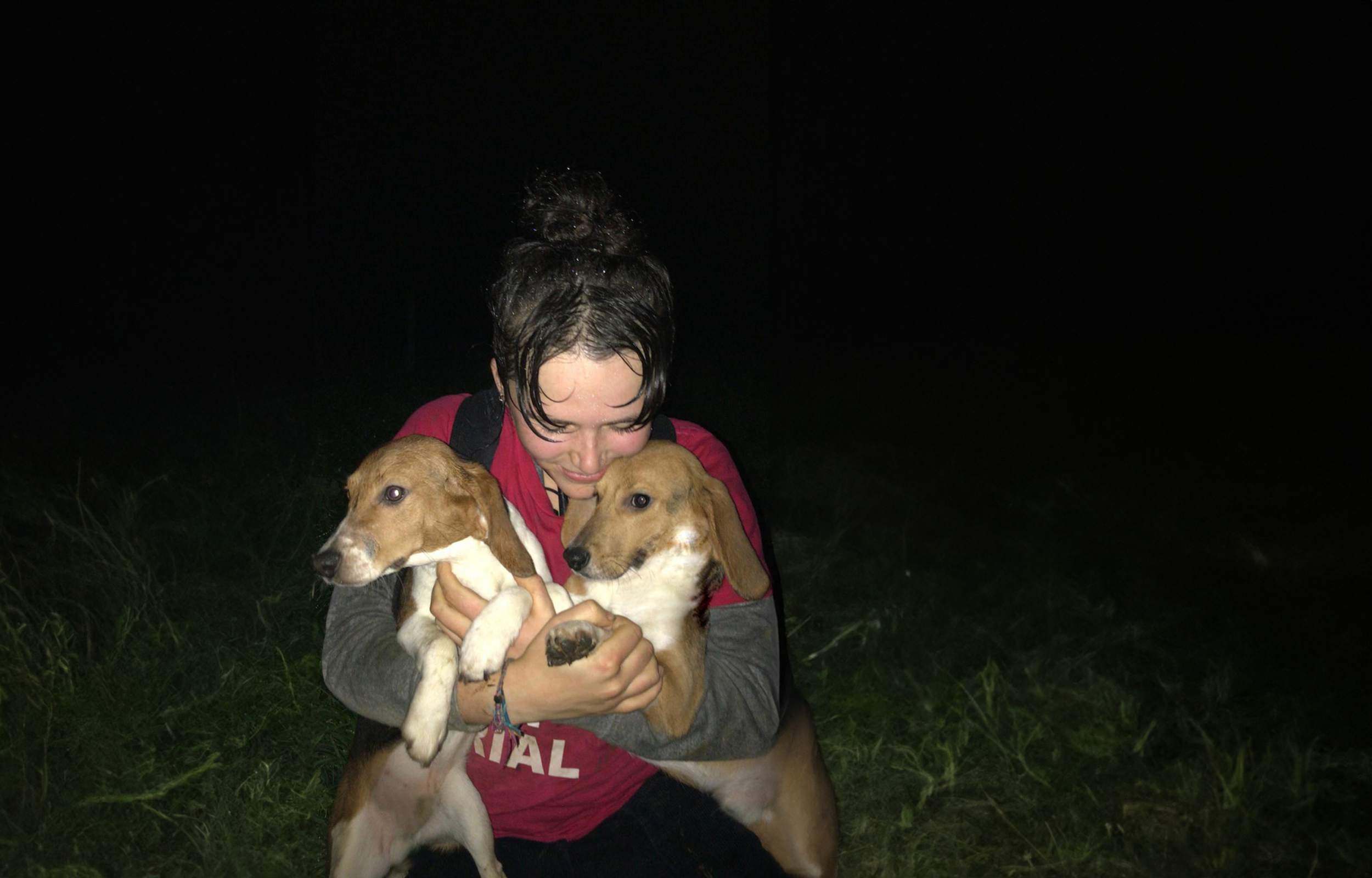 Love & Libby
Love and Libby. Rescued on 20 December 2022, intercepted by police, and returned to MBR Acres three days later.
Prosecution Concession
During the trials, the prosecution conceded that MBR Acres holds a licence to bleed dogs under terminal anaesthesia. This fact is now part of the court record. Defendants cited research published in the BMJ and the Cambridge Quarterly of Healthcare Ethics in support of their actions.
Open Rescue vs Theft
TL;DR: Open rescue is transparent, documented, and motivated by welfare -- not dishonesty. Two juries confirmed this.
Open Rescue
- Conditions documented on camera
- Identities disclosed, not concealed
- Motivated by preventing suffering
- Two juries found this was not dishonest
The Dishonesty Question
Theft requires proof of dishonesty. Both juries found rescuers were not acting dishonestly. Open action to prevent suffering negates that element.
Right to Peaceful Protest
TL;DR: Peaceful protest is a fundamental right protected by UK and European law.
Protected under Articles 10 and 11 of the European Convention on Human Rights (incorporated via the Human Rights Act 1998). Vigils, information distribution, and raising awareness are all lawful.
Animal Welfare (Sentience) Act 2022
TL;DR: UK law now formally recognises animals as sentient beings capable of suffering.
The Animal Welfare (Sentience) Act 2022 created the Animal Sentience Committee. Under section 2 it can report on whether UK government policy has “all due regard to the ways in which the policy might have an adverse effect on the welfare of animals as sentient beings”. The Act creates no offences and does not amend Section 58 — but it puts the question on the statute book.
If the law recognises that animals can suffer, how can the law permit an industry whose entire business model depends on that suffering?
Animals (Scientific Procedures) Act 1986
TL;DR: MBR Acres operates under a Section 2C establishment licence. That licence has conditions. Conditions can be breached, audited, suspended, or revoked.
ASPA 1986 (as amended from 1 January 2013 by the regulations transposing EU Directive 2010/63/EU) creates three separate licences:
s4 — Personal
Licenses the individual who performs procedures.
s5 — Project
Licenses the programme of work — the science and the protocols.
s2C — Establishment
Licenses the place. This is what MBR Acres holds.
Verbatim from statute
“A person must not, whether for profit or otherwise, carry on at any place an undertaking which involves one or more of the activities mentioned in subsection (2) unless the person is authorised to do so by a licence under section 2C.”ASPA 1986, section 2B(1)— legislation.gov.uk
The activities in section 2B(2) include the breeding of dogs and other listed species “with a view to— (i) their use in regulated procedures”. That is the activity MBR Acres is licensed for. The 3Rs — Replace, Reduce, Refine — are not policy ambitions. Since 2013 they have been written into the Act:
Verbatim from statute
“the principle of replacement is the principle that, wherever possible, a scientifically satisfactory method or testing strategy not entailing the use of protected animals must be used instead of a regulated procedure”ASPA 1986, section 2A(2)(a)— legislation.gov.uk
Section 2A(1) requires the Secretary of State to exercise every function under the Act “with a view to ensuring compliance with the principles of replacement, reduction and refinement”, and section 5B(3)(b) requires every project licence application to be assessed against them. Every validated non-animal alternative narrows what can lawfully be licensed. The government’s own “Replacing animals in science” strategy (11 November 2025) says of one test still licensed in the UK, the forced swim test, that it “has limited scientific validity”.
And under section 11(6), a licence may be suspended, revoked or varied “in any case in which it appears to the Secretary of State that it is appropriate to do so”. The wall is only as high as the political will behind it.
Read the full Establishment Licence breakdownPublic Order Act 2023, Section 7
TL;DR: Since 12 February 2026, an act that interferes with the use or operation of MBR Acres can be a criminal offence carrying up to 12 months’ imprisonment, a fine, or both. Two judicial reviews have been given permission to proceed.
Verbatim from statute
“A person commits an offence if— (a) they do an act which interferes with the use or operation of any key national infrastructure in England and Wales, and (b) they intend that act to interfere with the use or operation of such infrastructure or are reckless as to whether it will do so.”Public Order Act 2023, section 7(1)— legislation.gov.uk
The breadth of “interferes” under s7(4) is the problem. It captures any act that prevents the infrastructure being used or operated “to any extent” for “any of its intended purposes” — and s7(5) adds that this includes where use is “significantly delayed”.
The Public Order Act 2023 (Interference With Use or Operation of Key National Infrastructure) Regulations 2026 (S.I. 2026/112), in force from 12 February 2026, added “life sciences infrastructure” to the list in s7(6). It is defined to include infrastructure “used for or in connection with activities authorised by a licence under the Animals (Scientific Procedures) Act 1986” — which covers MBR Acres directly. On 27 April 2026, Ben Obese-Jecty MP, whose Huntingdon constituency includes MBR Acres, told Westminster Hall: “It would be extremely naive to believe that that legislation was introduced for any reason other than to address the presence and actions of Camp Beagle.”
Read the full Public Order Act analysisLegal Backing for Open Rescue
TL;DR: Multiple laws and jury precedents support the legitimacy of open rescue.
- Welfare Act -- duties of care may not be met at breeding-for-testing facilities
- Sentience Act -- these animals are legally recognised as capable of suffering
- Two jury acquittals -- the public does not consider open rescue dishonest
- Transparency -- documentation and identity disclosure negate dishonesty
Deep dives
Behind the Argument
The legal framework matters because of the people and dogs it affects. Recent imagery from the campaign.
In short
The law and MBR Acres: questions people ask
Does the Animal Welfare Act 2006 protect the beagles at MBR Acres?
What licence does MBR Acres hold?
Can the Home Office revoke the MBR Acres licence?
Is it illegal to protest at MBR Acres?
Is anyone challenging the 2026 protest regulations in court?
What did juries decide in the MBR Acres open rescue trials?
Does the Animal Welfare (Sentience) Act 2022 protect laboratory dogs?
This page is for informational purposes only and does not constitute legal advice. The law is complex and fact-specific. If you require legal advice, please consult a qualified solicitor.